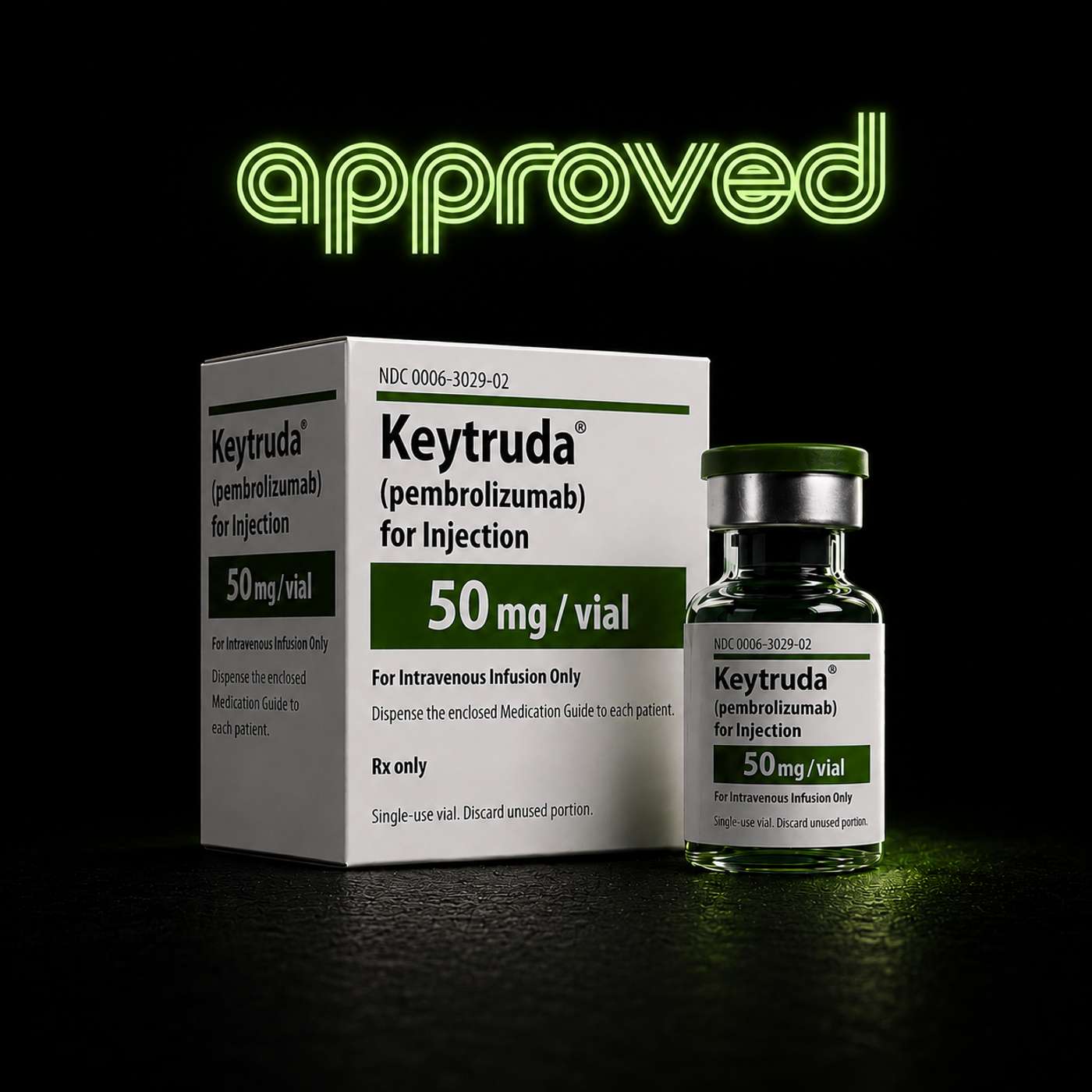
Approved
Keytruda: How Merck's Pembrolizumab Became the Best-Selling Cancer Drug of All Time
Listen to the full episodeDo not have it yet? Parasocial is a podcast player by Super Simple.
Do not have it yet? Parasocial is a podcast player by Super Simple.
Keytruda is Merck's $31 billion a year PD-1 inhibitor and the best-selling cancer drug of all time. In Episode 3 of Approved, Alex Kesin and Matthew Pech trace the development of pembrolizumab , featuring interviews the scientists who drove the program forward : co-inventors Gregory Carven and Michel Streuli, and former Merck oncology CMO Roy Baynes. Topics include preclinical PD1 / CTLA-4 checkpoint biology that brought industry attention to the target (Jim Allison's CTLA-4 work and Tasuku Honjo's PD-1 discovery); how pembro started as a failed rheumatoid arthritis antibody program at a Dutch subsidiary of a paint company; the two mega-mergers that nearly killed the program; the biomarker enrichment trial design behind KEYNOTE-024 that let Merck break BMS's lead in lung cancer; the 41-patient Johns Hopkins MSI-H trial behind the first tissue-agnostic FDA approval, and the Jimmy Carter melanoma case that brought pembrolizumab to the public conscious. The episode closes on what comes next for Merck: the 2028 patent cliff, the Keytruda QLEX subcutaneous launch, and efforts to find the next blockbuster checkpoint inhibitor, including Summit/Akeso's PD-1 / VEGF bispecific ivonescima